
RE
Religious Education
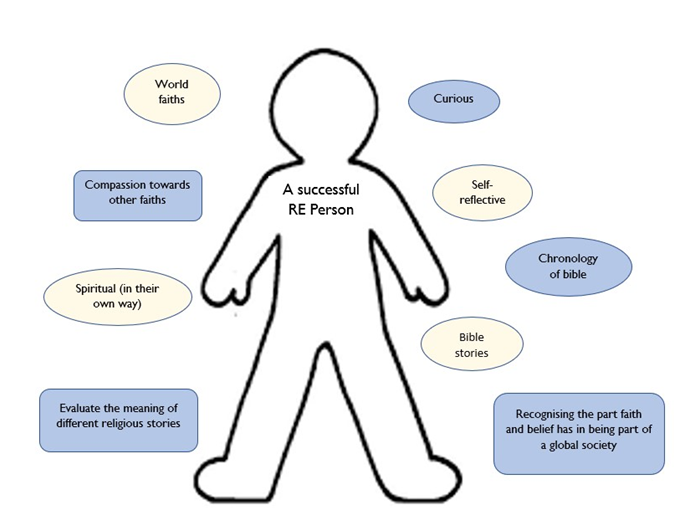
Religious education is to help develop pupils ‘knowledge of the world’s principal religious traditions, worldviews and promote tolerance and understanding towards others.
At St Barnabas our Christian vision ‘Let all that you do be in love’ Corinthians 16:14 can be felt from the moment you walk through our school gates. Adults and children at St. Barnabas flourish, even through times of adversity with our strong focus on mental health and wellbeing for all. Our school’s associated values are lived out day-to-day and have a strong impact on our school life and we hope that the values they have through the school will live with them when they have left. RE lessons engage pupils in systematic inquiry into significant human questions which religion and worldviews are addressed. Pupils have the opportunity to think about those big questions through ‘I wonder…’ statements and are encouraged to reflect on their own views and to respect the views of others. Our strong link with our local church is extremely important to us as a school and pupils speak lovingly of the members of the church who share worship with them.
IMPLEMENTATION
The long term plan incorporates units from the Worcestershire Agreed Syllabus. This is reviewed, adapted and is flexible with the needs of the children. As part of the planning process, teachers plan the following:
-
A pre-learning task to recap on prior learning and to recall previous knowledge of a specific religion.
-
A cycle of lessons for each subject, which carefully plans for progression of skills and depth of understanding which include substantive and disciplinary knowledge. Children use the key questions as a starting point for their own inquiry and opportunities are built in for children to reflect on their learning and to ask ‘I wonder…’
-
Questions which allow for pupils to thinking more deeply and in a philosophical/open manner
-
A post-learning task to show the progression of learning throughout a unit of work
-
A teacher assessment for their class after each unit of work using the assessment proforma
-
Teachers may also plan trips and visits from experts who will enhance the learning experience
-
Cross curricular links as appropriate (PSHCE, Art, English, Science, Drama, Art and Design Technology, Geography and History).
TO:
The long-term plan incorporates units from the NEW Worcestershire Agreed Syllabus. This is reviewed, adapted and is flexible with the needs of the children.
As part of the planning process, teachers plan the following:
-
Each unit begins with a reminder of the following:
-
the Aim of R.E.
-
a reminder of what the three Disciplinary lenses are: theology, Human Science and Philosophy.
-
The introduction of The Big Question and which ‘ways of Knowing’ skills that will be used.
-
A cycle of lessons for each subject is taught, which carefully plans for progression of skills and depth of understanding using disciplinary knowledge and ‘Ways of Knowing’ Children use the key questions as a starting point for their own inquiry and opportunities are built in for children to reflect on their learning and to ask ‘I wonder…’
-
Each lesson follows the same format:
-
Reminder of the Big Question and the Faith Jigsaw for the unit
-
Remember It!
-
L.O. and ‘Ways of Knowing’ skills used
-
Key Vocabulary
-
Main teaching
-
I wonder question. This is displayed at the end of each lesson and time is given for children to respond either individually on Post-it notes or in small groups/ as a class and scribed by an adult.
-
At end of unit, children complete a Showcase It task to measure against end points taken from Agreed Syllabus
-
A teacher assessment for their class after each unit of work using the assessment proforma
-
In some year groups, trips to places of worship take place to give an opportunity for children and staff to learn from experts.

Stretch and Challenge
Championing ALL children
St Barnabas believes that every child deserves to be and feel championed in subjects that they excel in. We are committed to plan inspiring learning opportunities in music for all pupils which ensure that any barriers, that disadvantaged learners and/ or pupils with SEND may face, do not impede their attainment or achievement in school.
High expectations
The principal aim of religious education is to explore what people believe and what difference this makes to how they live, so that pupils can gain the knowledge, understanding and skills needed to handle questions raised by religion and belief, reflecting on their own ideas and ways of living.
Adaptive teaching
Adaptive teaching strategies are used as part of our inclusive curriculum. This allows teachers to plan learning experiences that aim to overcome barriers for disadvantaged learners and children with SEND. For example, a pupil’s reading ability should not hinder their ability to showcase their knowledge, skills and understanding R.E. These are outlined in the following document: Link to the document: (add link to document here).
Some adaptations can be planned for in advance (macro); other adaptations require a responsive teaching approach (micro). Macro adaptations are large-scale instructional adjustments that are made based on information such as formal assessments. Micro adaptations are adaptations made within the moment-by-moment occurrences of the classroom.
Greater Depth
What does GDS look like in R.E.?
It is difficult to define what working at greater depth looks like in each curriculum subject in each year group. To avoid arbitrarily differentiated statements, St. Barnabas has used guidance from Aiden Severs Consultancy ‘Assessment: How Can I Identify Greater Depth Children in Foundation Subjects? October 2024’ to set out clear assessment criteria for GDS. Aiden Severs explores some general, non-subject specific characteristics of pupils working at greater depth:
-
Greater processing speed for both simple and complex tasks.
-
More thorough problem solving using a wider array of strategies.
-
Using more metacognitive strategies.
-
Sustaining attention.
-
Employing superior memory and more efficient retrieval processes.
-
Advanced abstracting and generalising.
-
Learning with less direct teaching.
Alongside this, teachers use the following criteria when assessing children working at GDS:
1. Independence
Pupils can work independently and show initiative, not just in their research but also in applying ideas that have already been covered. They can apply their ideas without recourse to the teacher or peer.
2. Confidence
Pupils are confident in their approach and can articulate their knowledge, skills and understanding well, e.g. when finding solutions to historical problems, evaluating science investigations and/or appraising prototypes in Design Technology.
3. Passion
Pupils demonstrate behaviours that show they are curious and passionate about their learning and/ or pieces of work.
4. Application
Pupils are able to apply knowledge, understanding and/ or skills to a range of different situations, e.g. explanations of how to apply drawing skills using a broad range of tools and media i.e. charcoal, pen and ink, paint.
5. Making connections
Pupils can synthesise lots of disparate pieces of information and bring them into a coherent shape. They are able to demonstrate an ability to make connections when applying their knowledge easily, e.g. making links to prior learning in Art and other subjects e.g. History, understanding background content for reasons that made some artists so famous OR comparing periods of history (comparing Ancient Egypt with other ancient societies to see what 5 things they had in common).
6. Authority:
Pupils flourish in opportunities to evaluate and critique their own and others’ work.
7. Explanation
Pupils can explain their learning to others.
IMPACT
Our RE Curriculum is balanced and well planned. If children are working at the expected level, they are deemed to be making good or better progress. In addition, we measure the impact of our curriculum through the following methods:
-
A reflection on standards achieved against the planned outcomes
-
Subject monitoring afternoons - pupil voice, book looks etc.
-
Formative and summative assessments against key questions and expected outcomes e.g. multiple choice quizzes
-
Tracking of knowledge in pre and post learning
-
Verbal feedback is provided within lessons and teacher’s mark children’s books in an appropriate way according to the key stage
-
Formative assessments are made against key questions and these inform planning, support end of unit summative assessments and end of year reports
The Right of Withdrawal from Religious Education
In the UK, parents still have the right to withdraw their children from RE on the grounds that they wish to provide their own RE. This provision will be the parents’ responsibility. This right of withdrawal exists for all pupils in all types of school, including schools with and without a religious designation. Students aged 18 or over have the right to withdraw themselves from RE. Parents also have the right to withdraw their child from part of RE and can do so without giving any explanation. Teachers also have the right to withdraw from the teaching of RE. However, this does not apply to teachers who have been specifically employed to teach or lead RE. If a teacher wishes to withdraw from the teaching of RE, a letter requesting this must be submitted to the head of the school and its chair of governors. If a teacher withdraws from the teaching of RE, the school must still make provisions for the pupils to receive their entitlement to RE.
At St Barnabas CE First and Middle School we believe that Religious Education helps all children, irrespective of their own religious beliefs, understand the world around them and the communities in our world. We wish to be an inclusive community but recognise that parents have the legal right to withdraw their children from RE on the grounds of conscience. However, the right of withdrawal does not extend to other areas of the curriculum when, as may happen on occasions, spontaneous questions on religious matters are raised by pupils or there are issues related to religion that arise in other subjects such as history and citizenship.
Any request from a parent for the withdrawal from RE must be made to the Headteacher. All requests will be granted, and parents are under no obligation to provide a reason for their decision. Once a request has been received and granted by the headteacher, parents may be offered an opportunity to discuss the nature of RE within school, to support the school’s understanding of the parents’ decision. We would welcome the opportunity to talk with you about Religious Education in the school; however, parents are under no obligation to take up this offer and it is not conditional on a request for withdrawal being granted. Should parents take up the offer of a discussion, the school may seek to establish the religious issues about which the parent objects to their child being taught.
If pupils are withdrawn from RE, schools have a duty to supervise them, though not to provide additional teaching or to incur extra cost. Pupils will usually remain on school premises.